Hold the ticket.Win the card.
Every GOCHA buy pumps $CARDS. Fees open gacha capsules, and the card ships to a random holder — every 5 minutes, no claim, no catch.
- Prizes sent
- —
- Value shipped
- —
- Eligible holders
- —
Why GOCHA
Most token fees disappear into team wallets. Ours buy graded cards for the people actually holding.
- 1
Fees die in team wallets
On most meme tokens, trading fees quietly drain into team wallets or burn into nothing. Holders watch the chart and get nothing back.
- 2
Holding is passive
No staking program, no points meta, no upside beyond price action. Loyalty goes completely unrewarded.
- 3
GOCHA flips the loop
Every fee becomes a gacha pull on Collector Crypt, and every graded card ships to a randomly drawn holder. Holding is the ticket — the fund does the rest.
How it works
No staking, no claiming, no dashboards to babysit. Fees come in, gacha goes out on Collector Crypt, holders get paid.
- 1
Buy GOCHA
Trading fees from $GOCHA stream straight into the GOCHA fund wallet — no manual top-ups, no team allocation.
- 2
Pumps $CARDS
Every buy pushes the sister token, and every trade pays a fee.
- 3
Fees open gacha
The fund spends those fees opening gacha machines on Collector Crypt. Whatever card drops, drops — vault-backed and fully on-chain.
- 4
Holder gets the card
Every 5 minutes a holder is drawn at random and the freshly-pulled prizes are sent to their wallet. No claim, no gas, no catch.
Gachas we open
A live taste of what the fund rolls on Collector Crypt — real machines, real graded cards, every card backed by a vaulted original. Odds and live stock land with the data feed.
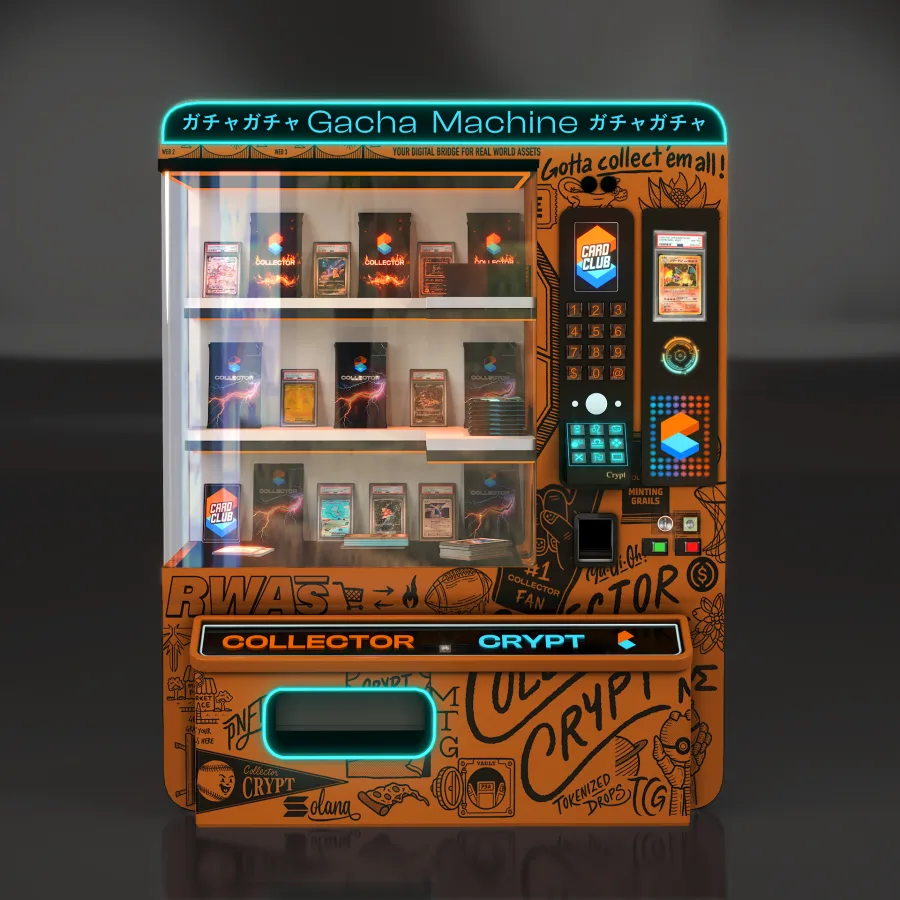
Bronze Pokémon Gacha Pack
- Live odds
- Coming soon
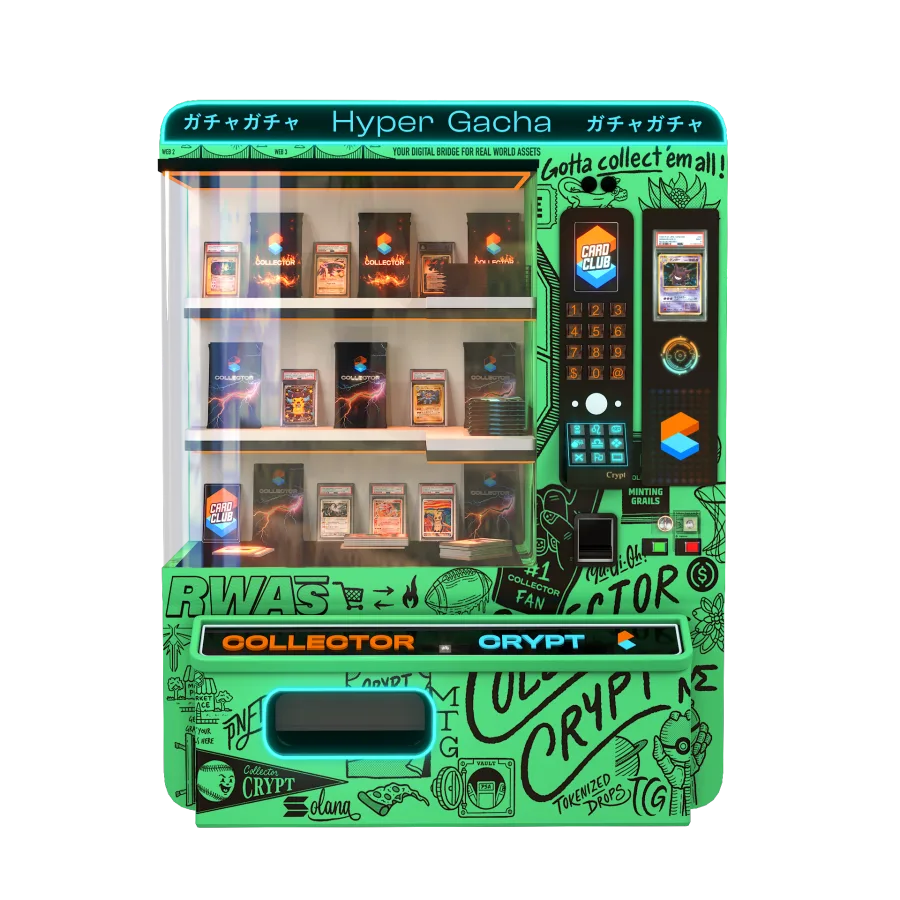
Hyper Pokémon Gacha
- Live odds
- Coming soon
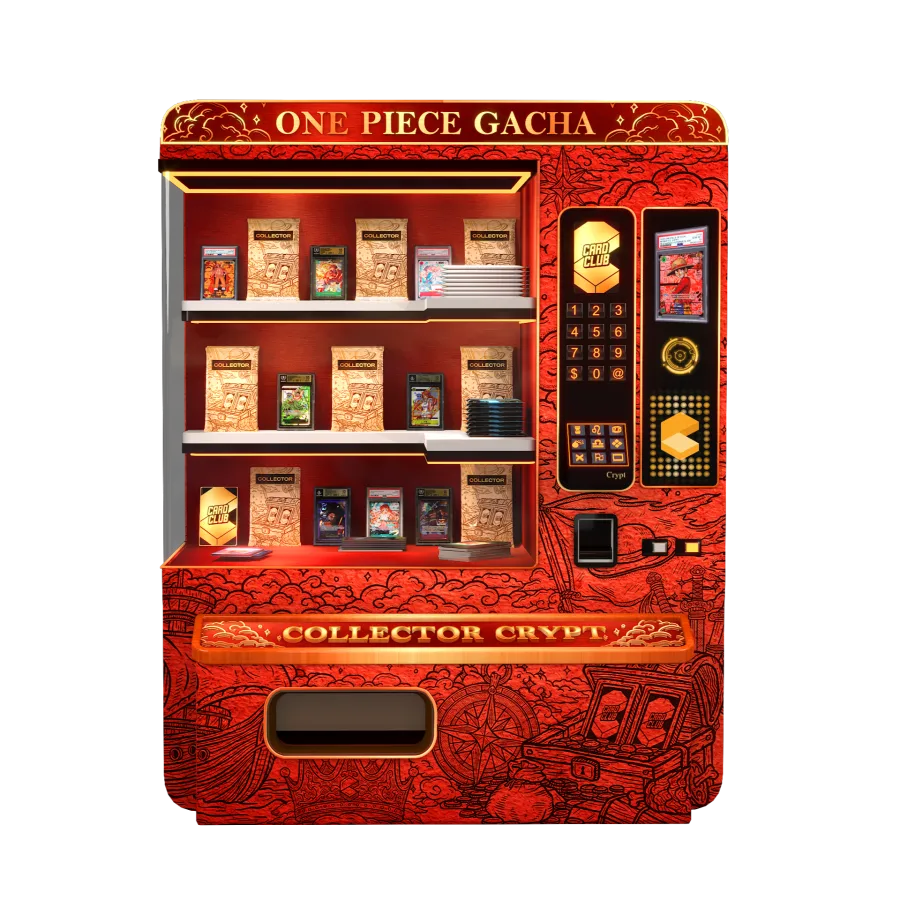
One Piece Emperor Pack
- Live odds
- Coming soon
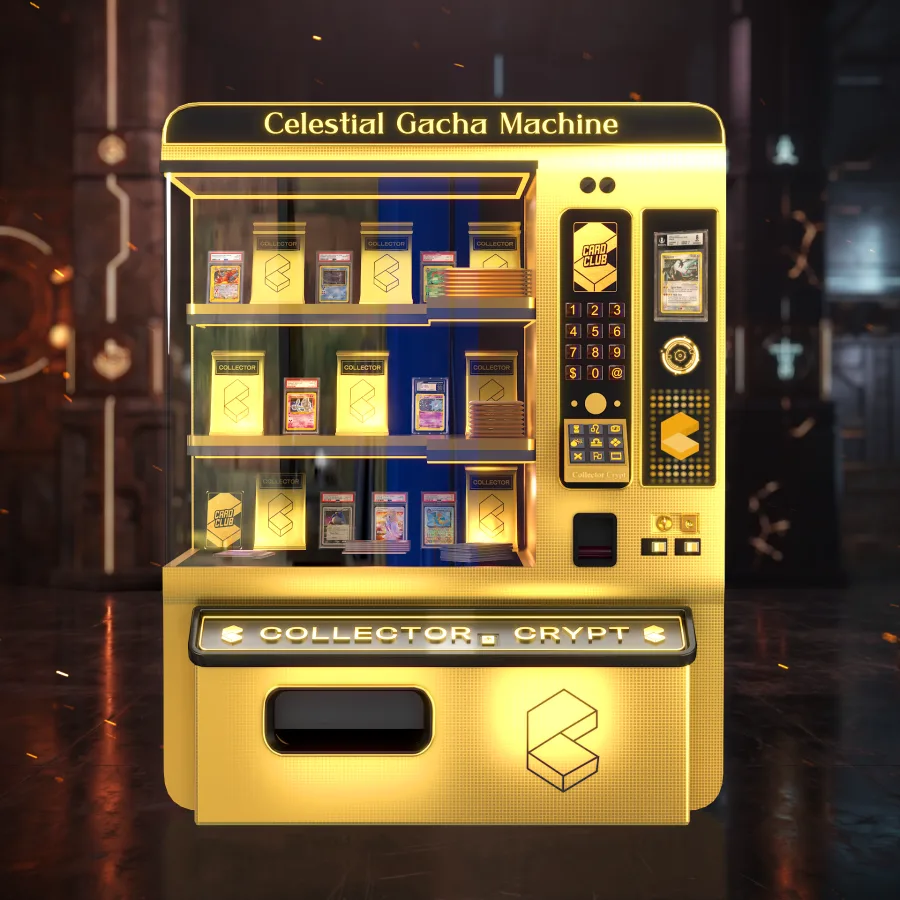
Celestial Pokémon Gacha Pack
- Live odds
- Coming soon
Recent pulls
Every capsule the fund opens streams here — pack, rarity, value and the wallet it landed in, straight from chain.
Fund stats
Every draw, every dollar, straight from the feed.
- Total draws
- —
- Value shipped
- —
- Avg prize value
- —
- Unique winners
- —
Prizes shipped since genesis
Total insured value of prizes
Per winning draw
Distinct wallets paid out
Biggest pulls ever
The record-breaking capsules and the lucky wallets that walked away with them.
Top holders
The wallets holding the most $GOCHA — and therefore the best odds each draw.
Holder leaderboard goes live once the token launches
Fairness
The whole point of a fund is trust. Here is how draws stay provably fair.
- 01
Always a random holder
Every draw picks one eligible holder uniformly at random, seeded by a verifiable on-chain source. No team picks, no exceptions — anyone can replay the draw and confirm the result.
- 02
Snapshot at draw time
Eligibility is taken from a holder snapshot captured the moment each draw fires, so last-second sniping earns nothing.
- 03
Everything is public
Fund wallet, gacha pulls on Collector Crypt, and payout transactions are all on Solana — fully auditable, end to end.
const seed = hash(memo, mint);
const winner = holders[seed % holders.length];
// no Math.random — anyone can replay it
send(card, winner); ✓
FAQ
Short answers. Longer ones live in the draw algorithm.
GOCHA is a community fund. Fees from the $GOCHA token are used to open gacha packs on Collector Crypt, and the graded cards they drop are sent to randomly drawn holders.
No. If your wallet is drawn, the prize is pushed directly to you. There is no claim button and no gas for you to pay.
A draw fires roughly every 5 minutes. The countdown at the top of the page tracks the next one.
Hold $GOCHA at the moment a draw fires. The more you hold, the better your odds — full eligibility rules ship with the live feed.
Not yet. The interface is live, but the on-chain data feeds are still being wired up — those sections currently show placeholders.